When recovering from a complex injury has stalled.
When recovery has stalled despite appropriate treatment, we focus first on the behavioural foundations that help clinical recovery progress: routines, engagement, confidence and connection. As those foundations strengthen, we work towards sustainable capacity, participation in work and a renewed sense of purpose — alongside the treating team's plan.
Aligned with the reasonable and necessary requirements.
For new treatment or service claims made on or after 1 October 2026, the NSW framework requires an injury-specific purpose, clinical justification and value for money, alongside an exclusions check. Our structured behavioural recovery program is designed to address these requirements. Suitability, service classification and approval remain individual decisions — the right program, for the right worker, at the right time.
1. Primary purpose
Address injury-related barriers and rebuild the behavioural foundations needed for sustainable recovery, capacity and participation — not general wellbeing unrelated to the claim.
2. Clinical justification
A treating specialist links the worker's injury, barriers and recovery goals to the proposed program. Implementation support complements clinical care rather than replacing it.
3. Cost effectiveness
Defined services, staged costs, individual goals and progress reporting support assessment of the expected benefits and value relative to alternative services.
4. Exclusions check
The referral describes structured, injury-specific recovery implementation, not general life or wellness coaching. The insurer must assess the actual proposed service against the exclusions.
A short introduction to the program.
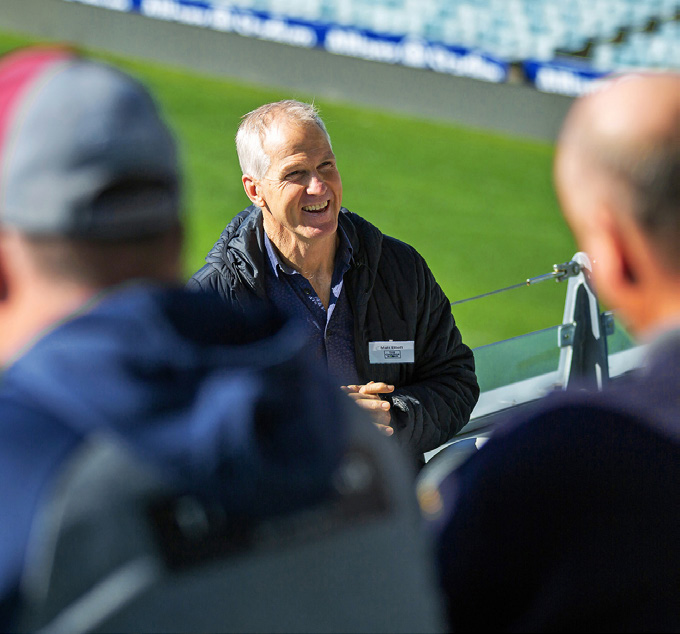
Before you refer — or raise it with someone — see what Restore looks like from the inside: the people, the place and the structure behind the outcomes. It plays right here, so you won't lose your spot on the page.
- What a participant's week actually looks like
- How behavioural foundations support sustainable capacity and confidence
- Why it reaches people that clinical treatment alone sometimes can't
- The reporting you get back to support a return-to-work plan
Designed for the complex recoveries that just aren't moving.
Restore helps people strengthen the behavioural foundations that support recovery when psychosocial factors, deconditioning or loss of confidence are limiting progress. We work with people who have no current work capacity, people whose existing capacity has stalled or is hard to sustain, and people returning to work who need to reduce the risk of re-injury.
Recovery has plateaued
Time off work is extending, treatment is no longer producing functional gains, and the claim is drifting toward long-tail despite appropriate clinical input.
Psychosocial barriers dominate
Low confidence, fear-avoidance, sleep disruption and mood have become the limiting factors — more than the original injury itself.
Capacity is the missing piece
The participant needs to rebuild genuine physical, cognitive and functional capacity before a return-to-work plan can realistically hold.
Identified someone who'd benefit — but not sure how to reach them?
It's one of the hardest parts of a complex claim. The relationship may have cooled, or there may have been little contact for months. You don't need to repair all of that before you start — let the program be the reason you reconnect. A genuinely positive offer, with the right materials to make that first conversation easy.
Something positive to send them
Forward the participant brochure — it explains the program in plain, human language and points them to a page made just for them, so the first thing you send isn't about the claim.
Build the clinical case
Request the updated case manager guide for yourself or a treating specialist. It explains suitability, the four reasonable and necessary checks and how behavioural foundations support recovery.
Nationally recognised recovery programs
Best Mental Health & Wellbeing Initiative
National Coaching Award
Collaboration in Injury & Disability
Everything you need to make a referral.
Detailed information for insurers, case managers and treating specialists — each resource below is labelled with who it's for, so you can go straight to what's relevant to you.
Case manager guide & legislative FAQ
The updated four-page guide explains suitability, the program pathways and how we address the NSW reasonable and necessary requirements. Enter your email and we'll send the PDF to you.
Insurer referral form
This is for insurers to submit a referral through to our program. A fillable Word document — complete the claimant, contact and program details, then email it back to us to start the referral.
Download the formTreating specialist referral
A plain, unbranded Word template for clinicians to put on their own letterhead. It covers no capacity, stalled or difficult-to-sustain capacity, and return-to-work or re-injury risk, with space for individual clinical reasoning.
How Restore complements clinical care
Matt Elliott on the gap between clinical recovery and full function — what we developed, how the program works alongside the treating team, and the story behind The Change Room.
Read the articleFind a start that works for you.
Online, on your schedule
Newcastle — McDonald Jones Stadium
Sydney — Accor Stadium
Real people. Real progress. Real recovery.
The clearest picture of what Restore does comes from the people who've been through it. Hear past participants describe — in their own words — what shifted, and what getting their momentum back actually looked like.
We work alongside Australia's leading workers compensation insurers and schemes to support people through their recovery.





Questions referrers often ask.
The things case managers and treating teams ask us most. For anything specific to a person you have in mind, get in touch and we'll talk it through.
Does The Change Room meet the new NSW legislative requirements?
Yes* — our injury-specific behavioural recovery program is designed to address the reasonable and necessary requirements. The NSW changes took effect on 1 October 2026 for new treatment or service claims made on or after that date. Our case manager guide explains the program against four areas: primary purpose, clinical justification, cost effectiveness and value for money, and the exclusions check.
*The right program, for the right worker, at the right time. Alignment does not mean every referral is suitable or automatically approved. The treating practitioner considers the worker's injury, stability, barriers and goals; the insurer determines approval on the individual claim, including whether the proposed service falls within an excluded category. This is not a claim of blanket SIRA approval.
Where recovery or capacity has stalled, the program may be a strong candidate for consideration once the worker is ready to engage safely. This includes people with no current capacity who are not at work, people who have capacity but need help to use or sustain it, and people returning to or already at work who face a risk of re-injury or loss of capacity.
We focus first on the behavioural foundations of recovery: daily routines, sleep, movement, connection, confidence and engagement with the treating team's plan. Improved sustainable capacity, participation in work and a renewed sense of purpose are outcomes we work towards as those foundations strengthen — not a guaranteed result or a substitute for clinical care.
See SIRA's official guidance on the 1 October 2026 changes. Earlier treatment or service claims can be subject to transitional rules.
When should I refer someone?
There's no hard cut-off, but earlier is better. Once the acute phase has settled, the sooner we begin the easier the recovery — there are simply fewer secondary barriers to work through. It's the same principle behind high-performance sport: early intervention leads to better outcomes.
As a guide, the first year is the window we'd most like to identify someone in:
- Physical injuries — often around 13 to 26 weeks post-injury, once the acute phase has subsided.
- Psychological injuries — typically a little later, somewhere between 26 and 52 weeks, as that timeline tends to run longer from the date of injury.
The earlier we connect with someone, the fewer psychosocial barriers have had a chance to build up alongside their injury — and the more we can help them shift their momentum toward a future-focused recovery. That said, we also work exceptionally effectively with people who have been recovering for much longer; their progress can simply be more gradual, because there are additional factors to work through.
Does the program replace or duplicate clinical treatment?
Is it a residential program? How long does it run?
The program runs for 13 weeks and combines one-on-one implementation support and online resources with a two-day, face-to-face Recovery Experience.
- The Recovery Experience runs 9:00am – 3:30pm on both days — it is not an overnight or live-in intervention.
- Transport and accommodation are coordinated for participants travelling to attend.
- We aim to hold one or two individual sessions with each participant before the two days — it greatly enhances the experience and allows for deeper understanding and engagement across the two days.
What does the program cost, and how is it billed?
The total program cost is $5,500 + GST, billed under code OTT-006. If a support person attends alongside the participant, it's an additional $500 + GST.
Billing is in two stages:
- $3,750 + GST on engagement — includes online program access and one-on-one implementation support.
- $1,750 + GST on attendance at the two-day Recovery Experience.
Is the program evidence-based?
How does a referral work?
What program options are available?
Who delivers the program?
What outcomes can we expect?
We focus first on the behavioural foundations of recovery, not a promised return-to-work result. Alongside the treating team's plan, we help participants work towards:
- An elevated level of personal accountability, confidence and momentum to improve their own wellbeing — separate from, and alongside, their clinical treatment.
- An improved mindset and daily practices that shift focus to what they can do, rather than staying stuck on past events.
- Improved connection with — and outcomes from — their clinical treatment pathway.
As those foundations strengthen, we work towards the following individual outcomes. Results vary with the worker's injury, readiness and circumstances:
- Measured improvements in wellbeing and functional capacity.
- Better sleep, breathing and movement routines supporting physical and psychological health.
- Improved physical health — including better pain management and increased mobility.
- Nutrition support to improve physical health.
- Strengthened social connection and support networks.
- Greater confidence and readiness to explore return-to-work options.
Reporting comes back to the referring team to support the return-to-work plan.
Have a person recovering from a complex claim that's stalled or not progressing?
Talk to our team about whether Restore is the right circuit-breaker. We'll walk you through suitability, the referral process and upcoming intakes.